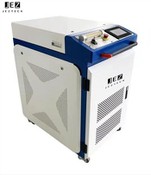
Laser (Light Amplification by Stimulated Emission of Radiation) is an abbreviation for Light Amplification by Stimulated Emission of Radiation, a device capable of generating a highly concentrated beam of intense light. Light Amplification by Stimulated Emission of Radiation It works on the principle of stimulated emission, in which a photon interacts with an excited atom, causing it to emit a second photon with the same properties as the first.
How lasers work
A laser consists of a gain medium, a cavity and a pump source. The gain medium is a material that can be excited to emit photons, usually by a pump source such as a flashlamp or RF field. The cavity is a reflective device that captures the emitted photons and amplifies the beam.
When the pump source is activated, it excites the atoms in the gain medium, causing them to enter an excited state. When a photon from the cavity interacts with the excited atoms, it stimulates the atoms to emit a second photon with the same properties as the first. This process is known as excited emission and produces a highly concentrated beam of intense light.
Depending on the gain medium used, lasers can be categorized into several types such as solid lasers, gas lasers and semiconductor lasers. Solid-state lasers use a solid material as the gain medium, while gas lasers use a gas mixture. Semiconductor lasers, on the other hand, use semiconductor materials as the gain medium. Each type of laser has its own unique characteristics and applications.
The working principle of lasers is based on the excited emission of photons, which results in the amplification of light. The laser's gain medium, cavity and pump source work together to produce a focused beam of intense light for a wide range of applications.