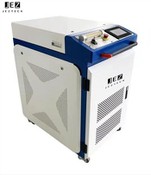
Graffiti on walls is a common occurrence in many urban areas. The traditional methods of cleaning graffiti, such as using chemicals and scrubbing, can often be time-consuming, labor-intensive, and may cause damage to the underlying surface. Therefore, using laser machines for graffiti removal has become increasingly popular due to their efficiency and effectiveness. There are several types of laser machines available for graffiti cleaning, each with its own advantages and limitations.
The two main types of lasers commonly used for this purpose are the CO2 and the YAG lasers.
CO2 lasers: These lasers are known for their high power output and ability to vaporize organic materials. They emit a wavelength of 10.6 micrometers, which makes them suitable for removing most types of graffiti, including paint, ink, and adhesives. CO2 lasers are effective for cleaning large areas quickly and are commonly used by professional graffiti removal services. However, they are not suitable for removing certain types of graffiti, such as those created using metallic or reflective materials.
YAG lasers: YAG lasers emit a wavelength of 1.06 micrometers and are particularly effective for removing graffiti made with metallic or reflective materials. They have the advantage of being able to selectively remove the graffiti without damaging the underlying surface. YAG lasers are often used for delicate surfaces or historical buildings where preservation is a priority. However, they may require multiple passes to completely remove stubborn graffiti, which can make the process slower compared to CO2 lasers.
In conclusion, the choice of laser machine for graffiti removal depends on the type of graffiti and the surface on which it is located. CO2 lasers are suitable for most types of graffiti removal, while YAG lasers are specifically useful for removing metallic or reflective materials. Professional graffiti removal services can assess the specific requirements and choose the most appropriate laser machine for cleaning wall graffiti effectively.