There are various methods to remove coatings from metal surfaces, and each method has its own advantages and disadvantages.
Let's explore some of the most commonly used methods.
1. Abrasive blasting - This method involves blasting the surface with abrasive particles at high speeds using compressed air, water, or steam.
This process mechanically removes the coating by wearing it away. Abrasive blasting is effective for removing thick or hard coatings, such as rust, paint, or powder coatings.
However, it can create a lot of dust and debris, which can be harmful to operators if not handled properly.
2. Chemical stripping - This method involves the use of chemicals to dissolve the coating on the metal surface.
Chemical stripping is effective for removing stubborn coatings such as epoxy or powder coatings.
The chemicals used in the process are hazardous and require proper handling and disposal.
Moreover, the process can take longer and require additional steps to neutralize the chemicals on the surface.
3. Thermal methods - This method involves heating the coated surface to a high temperature, causing the coating to decompose or evaporate.
Thermal methods are effective for removing organic coatings, such as paint or varnish.
However, the process can create a lot of fumes and require protective equipment for operators.
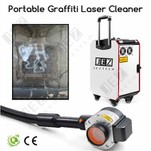
4. Laser ablation - This method involves using high-intensity laser beams to remove coatings from metal surfaces.
Laser ablation is effective for removing coatings without damaging the underlying metal surface.
Moreover, the process is precise and does not require any chemicals or abrasive particles.
Overall, all of these methods have their own advantages and limitations, and their effectiveness depends on the type of coating and the metal surface.
However, among the methods, laser ablation is the most advantageous technique as it offers precise and fast removal without damaging the underlying metal surface.
Additionally, it does not produce any hazardous waste or harmful fumes, making it an environmentally friendly option.