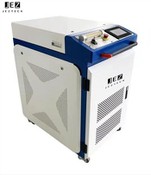
Laser cleaning machines have become increasingly popular in recent years due to their efficiency and precision. However, many people wonder if there is a universal power for these machines that can effectively clean various materials without causing damage. The answer to this question is not straightforward, as the power required for cleaning depends on several factors.


Machine Power and Mold Material
One of the primary factors that determine the power needed for a laser cleaning machine is the material of the mold or object being cleaned. Different materials require different energy levels to be effectively cleaned, and if the machine is too powerful, it can cause damage to the mold or object. Therefore, the machine must not be too powerful so as not to ruin the molds and clean the moulds at the same time.
Surface Area and Texture
The surface area and texture of the mold or object also affect the power required for cleaning. For example, a large, flat surface will require less power to clean than a small, intricate object with numerous nooks and crannies. The texture of the surface can also affect the power needed, as rough surfaces may require more energy to remove dirt and debris effectively.
Cleaning Objectives
The specific cleaning objectives also play a role in determining the power of the laser cleaning machine. If the goal is to remove light dirt and dust, a lower power setting may be sufficient. However, if the mold or object has heavier buildup or requires deep cleaning, a higher power setting may be necessary.
In conclusion, there is no one-size-fits-all answer to the question of whether a laser cleaning machine has a universal power. The power required depends on several factors, including the material of the mold, the surface area and texture, and the specific cleaning objectives. It is essential to choose a machine with the appropriate power level to ensure effective cleaning without causing damage to the mold or object.