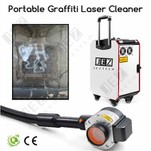
Laser cleaning machines are widely used for efficient removal of rust and other contaminants from various surfaces. The parameter settings play a crucial role in achieving optimal cleaning results. In this article, we will discuss the key parameters that need to be considered when using a laser cleaning machine for rust removal.
1. Laser Power
The laser power determines the intensity of the laser beam used for cleaning. Higher laser power results in more efficient removal of rust, but it may also increase the risk of damaging the surface. The appropriate laser power setting depends on the thickness and type of rust, as well as the material of the underlying surface.
2. Scanning Speed
The scanning speed refers to how fast the laser beam moves across the surface being cleaned. A slower scanning speed allows for more thorough cleaning, as the laser spends more time on each spot. However, a very slow speed may lead to excessive heating and potential damage to the surface. Finding the right balance between cleaning efficiency and surface protection is crucial.
3. Spot Size
The spot size of the laser beam determines the area that is treated at a time. A smaller spot size allows for precise cleaning of small and intricate areas, while a larger spot size covers a larger area but may not be as effective in removing stubborn rust. The spot size should be selected based on the size and shape of the rusted areas.
4. Pulse Duration
Pulse duration refers to the duration of laser beam emission during each laser pulse. Shorter pulse durations are suitable for thin layers of rust, while longer pulse durations are needed for thicker rust. The pulse duration should be adjusted according to the depth of the rust layer.
5. Standoff Distance
The standoff distance is the distance between the laser cleaning machine and the surface being cleaned. It affects the focus and intensity of the laser beam. A shorter standoff distance provides better focus and higher cleaning efficiency, but it also increases the risk of surface damage. The appropriate standoff distance should be determined based on the requirements of the cleaning task. In conclusion, when using a laser cleaning machine for rust removal, it is important to consider the laser power, scanning speed, spot size, pulse duration, and standoff distance. Finding the optimal parameter settings ensures effective and safe cleaning, leading to improved surface quality.