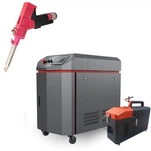
Pulsed lasers and continuous lasers are two main types of lasers, and they differ in terms of their operating principles, properties, and applications. This article will outline the major differences between these two types of lasers.
Operating Principle
Pulsed lasers operate by generating a high-energy pulse of light for a very short duration, typically in the nanosecond or even picosecond range. They use a flashlamp, diode, or another energy source to pump the lasing material, which results in the emission of a concentrated burst of light. Continuous lasers, on the other hand, emit a continuous beam of light that has a steady output power. They operate by establishing a stable population inversion within the lasing material, allowing for sustained emission of light.
Output Characteristics
The output characteristics of pulsed and continuous lasers greatly differ. Pulsed lasers produce high peak powers and short-duration pulses, which are advantageous for applications such as laser cutting, material ablation, and medical treatments. Continuous lasers, on the other hand, have stable and sustained output powers, making them suitable for applications like laser engraving, laser printing, and medical diagnostics.
Energy Efficiency and Cooling Requirements
Pulsed lasers are generally less energy-efficient compared to continuous lasers. The high-energy pulses require substantial amounts of energy, and thus their overall energy efficiency is lower. Additionally, pulsed lasers generate significant heat during operation, which necessitates efficient cooling systems to prevent overheating.
Continuous lasers, on the other hand, are more energy-efficient due to their sustained emission of light. They also generate less heat, allowing for simpler and less elaborate cooling systems.
Applications
The distinct characteristics of pulsed and continuous lasers make them suitable for different applications. Pulsed lasers are widely used in fields such as materials processing, high-speed imaging, and range finding. Continuous lasers find applications in areas such as telecommunications, spectroscopy, and laser pointers.
In conclusion, the primary differences between pulsed lasers and continuous lasers lie in their operating principles, output characteristics, energy efficiency, and applications. Understanding these differences is crucial in selecting the appropriate laser for a specific application.