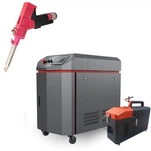
Laser cleaning is a highly efficient and eco-friendly technique used to remove contaminants and unwanted layers from various surfaces, including molds used in the manufacturing industry. Laser cleaning offers numerous advantages over traditional cleaning methods, making it an ideal choice for mold cleaning applications.
Increased Precision and Accuracy
One of the key benefits of laser cleaning in mold applications is its high level of precision and accuracy. The laser beams can be accurately focused on specific areas of the mold, ensuring thorough cleaning without any damage to the surface. This level of precision is particularly important in intricate molds that have complex shapes and delicate details.
Non-contact and Non-abrasive Cleaning
Laser cleaning is a non-contact and non-abrasive cleaning process, which eliminates the risk of physical damage to the mold surface. Traditional cleaning methods often involve using abrasive tools or chemicals that can cause scratches, wear, or corrosion. Laser cleaning, on the other hand, uses laser energy to vaporize the contaminants, leaving the mold surface intact and undamaged.
Removal of Various Contaminants
Laser cleaning effectively removes various types of contaminants from molds, such as rust, paint, grease, and oxides. The intense laser energy breaks down the contaminants into small particles, which are then easily removed from the mold surface. This process ensures a thorough and efficient cleaning of the molds, improving their performance and prolonging their lifespan.
Reduction in Downtime and Costs
Compared to traditional cleaning methods, laser cleaning offers significant advantages in terms of downtime and costs. Laser cleaning is a quick process that requires minimal setup and preparation time. It also eliminates the need for costly chemicals, solvents, or abrasive materials. With laser cleaning, molds can be cleaned in-place without the need for disassembly, reducing downtime and improving overall productivity.
Environmental Friendliness
Laser cleaning is an environmentally friendly cleaning method as it does not require the use of harmful chemicals or generate hazardous waste. It is a clean and sustainable process that contributes to a greener manufacturing industry. Moreover, laser cleaning can be easily integrated into automated systems, further reducing the human intervention and ensuring a safe working environment.
In conclusion, laser cleaning has become an essential tool in mold cleaning applications due to its precision, non-abrasive nature, ability to remove various contaminants, cost-effectiveness, and environmental friendliness. With the advancement of laser technology, it is expected that laser cleaning will continue to revolutionize the mold cleaning process and find even more extensive applications in the manufacturing industry.